Tote Betting Explained: How Pool Betting Works at UK Racecourses
 Available in US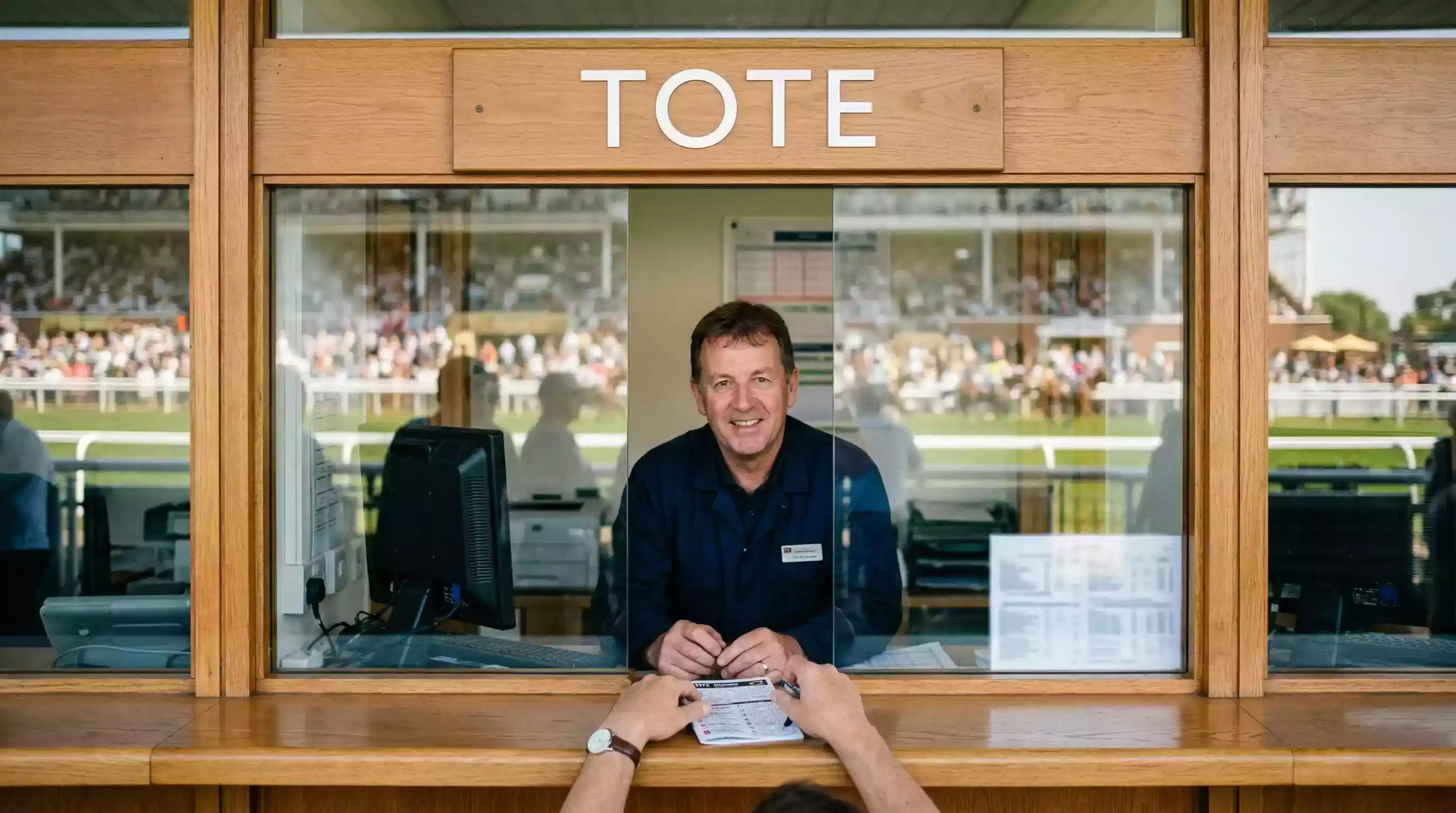
Fixed Odds or Pool: Why Tote Betting Still Has a Place
The first time I stood at a Tote window at Cheltenham, I placed a two-pound win bet and collected 27 pounds. The bookmakers in the ring had returned an SP of 10/1 on the same horse — a 22-pound return on the same stake. The Tote paid more because the pool happened to be weighted towards the favourites that race, leaving less money chasing my outsider. That day, I learned something most beginners never discover: pool betting and fixed-odds betting are fundamentally different games, and sometimes the pool pays better.
Racecourse attendance topped 5.031 million in 2025, the first time the figure exceeded five million since before the pandemic. A significant chunk of those visitors bet through the Tote on the day, especially casual racegoers who walk up to a window without an online account. The Tote remains the dominant form of on-course betting for a reason — it is accessible, visual, and operates on a completely different pricing mechanism from the bookmakers standing fifty metres away in the betting ring.
How the Tote Pool Calculates Dividends
With fixed odds, you know your potential return the moment you place your bet. The bookmaker offers 7/1, you take it, and if the horse wins, you get 7/1 regardless of what happens afterwards. Pool betting works differently. You do not know your payout until after the race.
Here is how it works. Every punter who bets into the Tote win pool is contributing to a shared pot. Once the race is over, the Tote deducts its commission — typically around 13 to 16 percent depending on the bet type — and divides the remaining pool among all winning ticket holders in proportion to their stake.
Imagine a simplified win pool of 10,000 pounds. After a 14 percent deduction, 8,600 pounds remains. If 1,000 pounds of that original pool was staked on the winning horse, the dividend is 8,600 divided by 1,000, which equals 8.60. A one-pound stake returns 8.60 pounds. If only 500 pounds was staked on the winner, the dividend doubles to 17.20. The less popular the winner, the bigger the pool dividend — which is why outsiders sometimes pay substantially more through the Tote than at fixed odds.
The flip side is equally true. Heavily backed favourites tend to return less through the Tote because so much of the pool is staked on them. If 60 percent of the pool is behind the favourite, the mathematics guarantee a poor dividend for anyone who backed it.
Tote Bet Types: Win, Place, Exacta, Placepot, Jackpot
Average attendance per fixture rose by 3.6 percent to 3,526 in 2025, and many of those racegoers’ first experience of the Tote is through its simplest bet: the win pool. Pick a horse, stake your money, and if it wins you share the pool. The minimum stake is typically one pound.
The place pool works the same way but pays out for horses finishing in the places — the number of paying positions depends on the field size, just as with fixed-odds each-way betting. The Tote determines its own place terms, which do not always align exactly with bookmaker terms.
The Exacta requires you to predict the first two finishers in the correct order. It is a tougher bet but the dividends can be substantial in large fields. A straightforward Exacta costs one pound, but you can box multiple horses — selecting, say, three horses in any order of first and second — for a higher total stake.
The Placepot is the Tote’s flagship bet and a favourite of mine for festival meetings. You need to pick a placed horse in each of the first six races on the card. A one-pound unit stake covers one combination, but most punters use permutations — selecting two or three horses per race and letting the combinations multiply. A Placepot with two selections in each of six races costs 64 pounds (2 to the power of 6). The returns can be enormous on days when favourites fail. Placepot dividends of several hundred pounds per unit are not uncommon at festivals.
The Jackpot demands a winner in each of the first six races — not a placed horse, the winner. It is the hardest Tote bet and the payouts reflect that difficulty. Rollover pools, where nobody picks all six winners, can accumulate to six-figure dividends. This is the lottery end of horse racing betting. Treat it as entertainment, not investment.
When Pool Pays More Than the Bookmaker
Alan Delmonte, the HBLB’s Chief Executive, has emphasised that racing needs to be structured in ways that attract the modern consumer. The Tote is part of that equation because it offers something fixed-odds cannot: unpredictable upside. There are specific scenarios where pool betting consistently outperforms the ring.
Outsiders in small-pool races tend to pay handsomely through the Tote. When the pool is dominated by money for the favourite and a long shot wins, the few punters who backed the winner share a disproportionate chunk of the pot. I have seen Tote dividends of 40/1 on a horse that returned 25/1 SP at fixed odds. That does not happen every day, but it happens often enough to be worth knowing about.
Conversely, the Tote almost always offers worse value on strong favourites. If a horse is odds-on with the bookmakers and attracts heavy Tote support, the pool dividend will underperform the fixed price. As a general rule: use the Tote for outsiders and longer-priced contenders, and use fixed odds for favourites and shorter-priced horses.
The Placepot deserves a special mention. Because it runs across six races, the compounding effect of each leg means that a small stake can generate a return entirely out of proportion to the original investment. On days when the results are mixed — some favourites winning, some getting turned over — the Placepot dividend sits in a sweet spot. It is the best-value bet the Tote offers for someone looking to cover an entire afternoon’s racing with a modest budget.
If you want to understand the fixed-odds side of the equation in more detail, the full breakdown of horse racing bet types covers singles, multiples, and everything in between.
Can I place Tote bets online or only at the racecourse?
You can place Tote bets both online and at the racecourse. The Tote operates its own website and app, and several major UK bookmakers also offer access to Tote pools through their platforms. The pools are the same whether you bet online or at the track — your stake goes into the same pot either way.
What is the Tote Placepot and how does it work?
The Placepot requires you to pick a placed horse in each of the first six races on a card. A one-pound unit stake covers a single combination. Most punters use permutations with multiple selections per race to increase their chances. The dividend is shared among all winning tickets. Returns vary dramatically depending on results but can reach hundreds of pounds per unit on difficult days.
Written by the editors at First bet Horse Racing.