Royal Ascot Betting Guide: How to Navigate Five Days of Flat Racing at the Top Level
 Available in US
Why Royal Ascot Is the Flat Season’s Biggest Betting Week
Cheltenham belongs to the jumps. Royal Ascot belongs to the flat. And while Cheltenham has the roar, Ascot has the scale. Five million viewers tuned in to ITV’s coverage in 2025, with the final day seeing a viewership increase of over 20 percent year-on-year. No other flat meeting in Britain commands that kind of attention from both the casual viewer and the serious punter.
What makes Royal Ascot distinct is the range of racing it offers. In a single afternoon, you might see the fastest sprinters in Europe cover five furlongs in under a minute, followed by a two-and-a-half-mile staying test that rewards stamina over speed. Between those extremes sit middle-distance Group 1 races that attract horses from across the globe. For a bettor, this diversity means five days of radically different puzzles — and each requires a slightly different approach.
Five Days, 35 Races: A Quick Map
Royal Ascot runs from Tuesday to Saturday, with seven races each day — 35 races in total. The programme is carefully balanced between Group races, Listed races, and handicaps.
Tuesday opens with the Queen Anne Stakes, a Group 1 mile race that often features the reigning champion miler. The King Charles III Stakes (formerly the King’s Stand) follows — a Group 1 five-furlong sprint that sets the tone for the week’s speed events. The Coventry Stakes introduces the two-year-old generation to the meeting.
Wednesday centres on the Prince of Wales’s Stakes, a 10-furlong Group 1 that regularly attracts the best middle-distance horses in training. The Royal Hunt Cup, a heritage handicap over a straight mile with 25-plus runners, is the day’s betting highlight for punters seeking each-way value at longer odds.
Thursday features the Gold Cup, the meeting’s signature race — two and a half miles of staying excellence. The Gold Cup is Royal Ascot’s equivalent of the Cheltenham Gold Cup in prestige, and repeat winners become legends. The supporting card includes the Norfolk Stakes for two-year-old sprinters and the Ribblesdale Stakes for staying fillies.
Friday and Saturday complete the week with a mix of Group races and competitive handicaps. The Coronation Stakes (Group 1, fillies, one mile) and the Commonwealth Cup (Group 1, three-year-old sprint) are Friday’s headline acts. Saturday delivers the Diamond Jubilee Stakes, a six-furlong Group 1 sprint, and the Wokingham, a big-field sprint handicap that is one of the week’s most popular betting races.
The Group 1 Races That Define the Meeting
Attendance among under-18s at British racecourses rose 17 percent in 2025, and Royal Ascot’s combination of spectacle and elite competition is part of what draws younger audiences. The Group 1 races are where the spectacle peaks.
Eight Group 1 races are spread across the five days, covering distances from five furlongs to two miles four furlongs. Each carries the highest level of prize money and attracts the best horses from Britain, Ireland, France, Japan, Australia, and the United States. These are not races decided by handicap weights — every runner carries the same weight for its age and sex, meaning the best horse on the day should win.
For betting purposes, Group 1 races at Royal Ascot present a mixed picture. The form is typically strong and well-established, which makes the market more efficient — the favourite has a reasonable strike rate because the best horse is usually correctly identified. The challenge is finding value. Prices on the principal contenders are often short, and the potential return on a winning favourite may not justify the risk.
My approach to Group 1 races at Ascot is to be selective. I will back a horse in a Group 1 only when I believe the market has underestimated it — when there is a valid angle (trip preference, ground suitability, improved form that the market has not priced in) that justifies a price longer than the favourite. Otherwise, I watch and enjoy the race without a financial stake.
Big-Field Handicaps: Where the Value Sits
Brant Dunshea, the BHA’s Chief Executive, has pointed to attendances increasing by nearly five percent in 2025, driven partly by the sport’s largest-ever consumer marketing campaign. That growing audience discovers quickly that the handicaps at Royal Ascot are where betting comes alive.
The Royal Hunt Cup, the Wokingham Stakes, and the Buckingham Palace Stakes routinely attract fields of 20 to 30 runners. At those field sizes, enhanced place terms (often five or six places) become available, and the odds on outsiders stretch to 25/1 and beyond. The each-way arithmetic is fundamentally different from a Group 1 with eight runners.
Handicaps at Ascot reward granular analysis. The straight mile course at Ascot has a known draw bias in large fields — runners drawn low or high can be advantaged depending on where the ground is fastest. Checking the draw statistics for the specific distance and current going conditions is a five-minute exercise that can immediately eliminate a quarter of the field from consideration.
Weight is the other lever. Handicap races are designed to be competitive, but a horse carrying 8 stone 2 pounds has a significant physical advantage over one carrying 10 stone. Lightly weighted horses that have been raised in the handicap less aggressively than their form suggests often represent value in big-field Ascot handicaps. I look for horses that have won their last race or two at a lower level and are stepping up in class at Royal Ascot with a weight that still looks manageable.
The Wokingham, in particular, is one of my favourite bets of the year. A six-furlong sprint handicap with 25-plus runners, enhanced place terms, and a field full of rapid, well-handicapped sprinters — it is chaotic, unpredictable, and packed with each-way value. If I had to pick one race at Royal Ascot to bet on, it would be this one.
For a complete breakdown of how each-way betting mechanics interact with large fields and enhanced place terms, the each-way betting guide covers the calculations step by step.
How do Royal Ascot handicaps differ from standard races?
Royal Ascot handicaps attract much larger fields than everyday racing — often 20 to 30 runners compared to 8 to 12 at a typical midweek meeting. The prize money is substantially higher, the quality of horse is stronger, and bookmakers frequently offer enhanced place terms (five or six places instead of four). The draw also plays a bigger role over Ascot’s straight course, making stall position a factor that does not exist at most other tracks.
Are Royal Ascot markets affected more by ante-post moves?
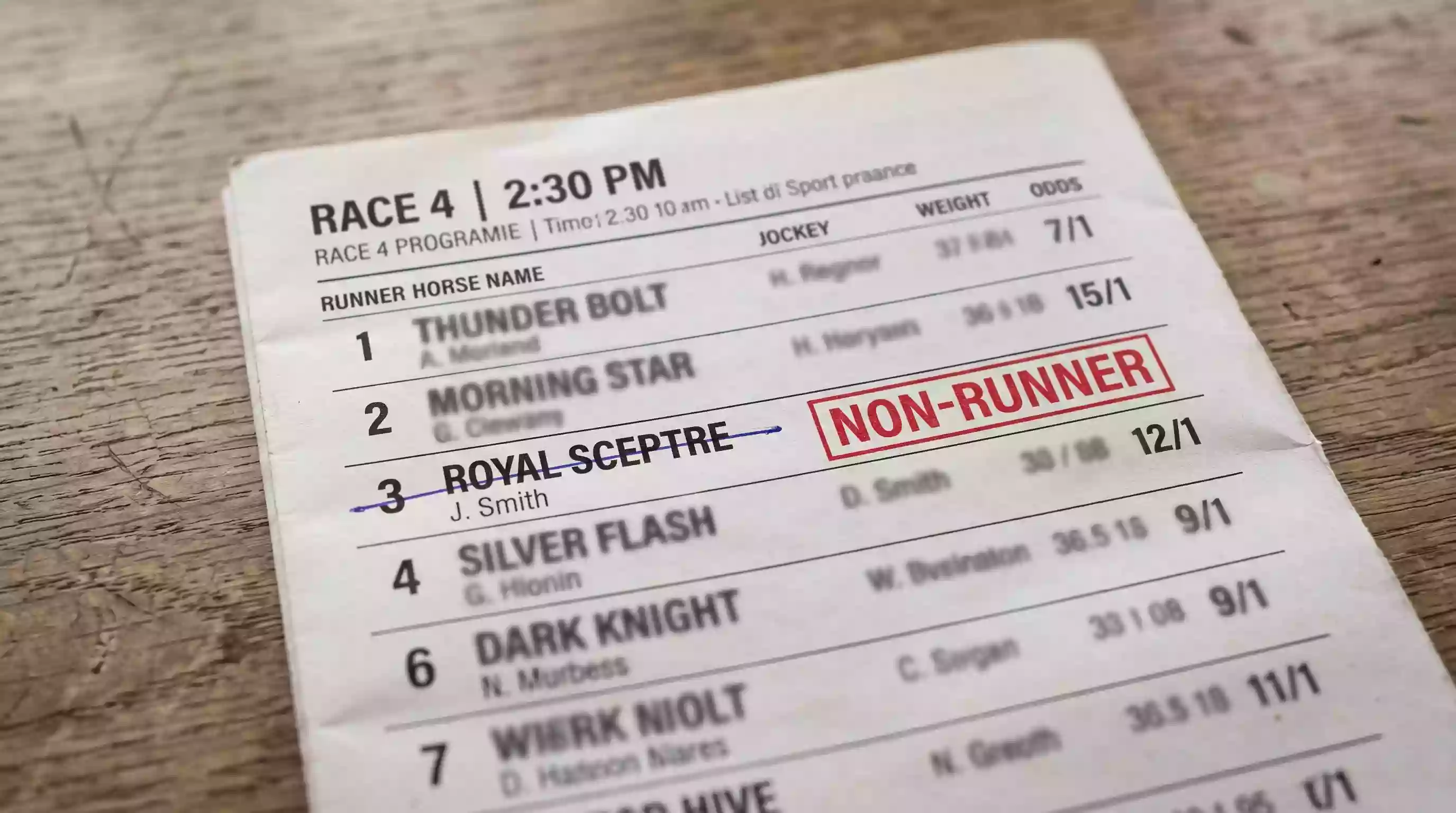
Yes. Royal Ascot ante-post markets open well before the meeting and attract significant volumes of money from both casual and professional punters. Early movers — horses that are backed heavily weeks before the meeting — tend to shorten considerably by race day. However, ante-post non-runner risk applies: if a horse is withdrawn, your stake is lost with no refund unless a specific non-runner-no-bet promotion applies.
Created by the ”First bet Horse Racing” editorial team.