Horse Racing KYC Verification: What ID You Need and How to Complete It Quickly
 Available in US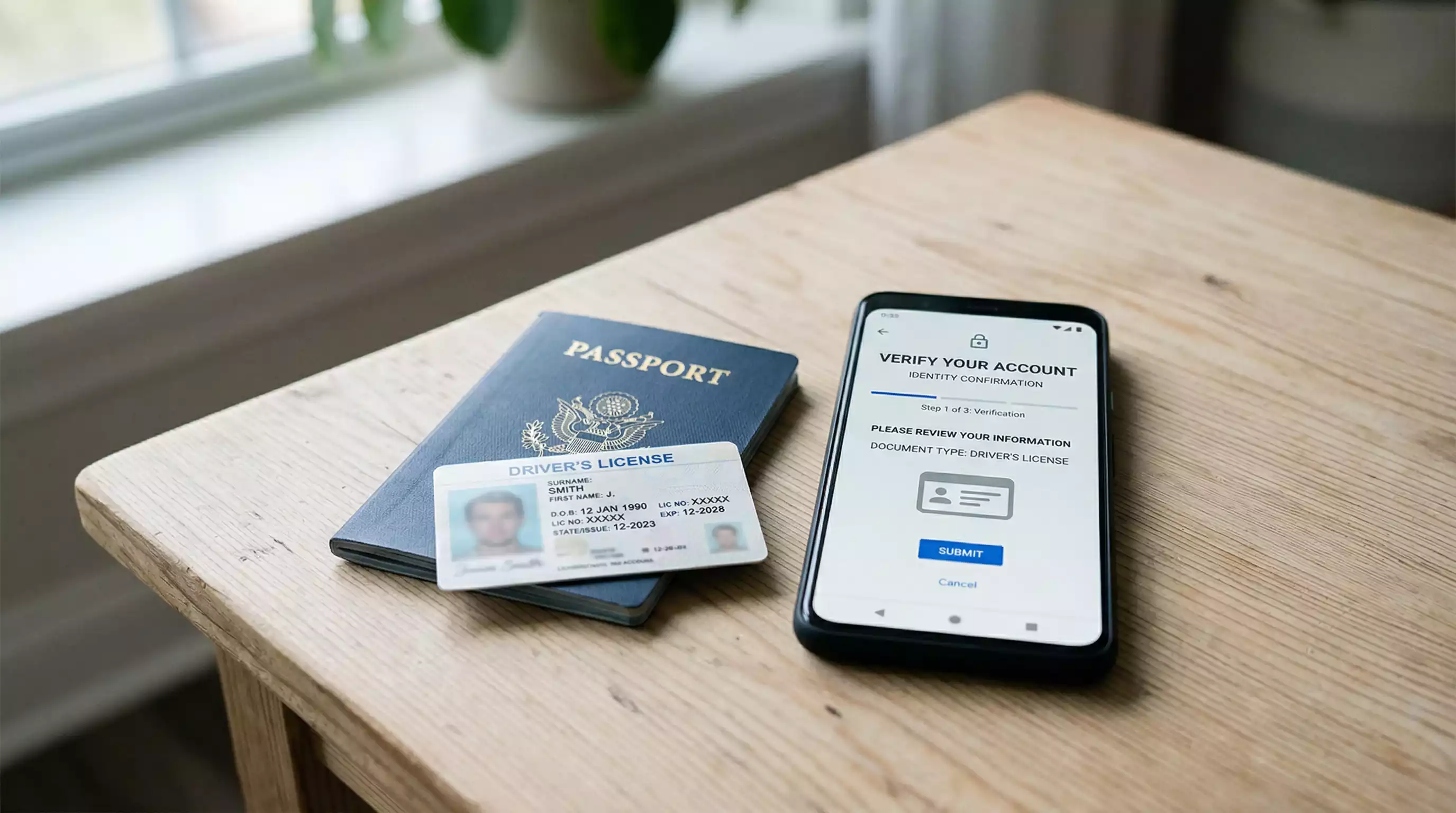
Before You Bet: Why Every UK Bookmaker Asks for ID
A friend signed up for a betting account on Grand National morning, expecting to have a flutter within minutes. Instead, he spent the entire race staring at a “verification pending” message. His account was locked until he uploaded a photo of his driving licence and a utility bill. The Grand National came and went. His bet never happened.
Know Your Customer — KYC — is the process every UK-licensed bookmaker must follow to verify your identity before you can bet or withdraw funds. Since February 2025, the Gambling Commission has tightened the financial vulnerability threshold to 150 pounds in net monthly deposits, making early verification more important than ever. KYC is not optional. It is a legal requirement under anti-money laundering regulations and UKGC licence conditions, and no legitimate operator can let you skip it.
The purpose is threefold: confirm you are who you say you are, confirm you are over 18, and establish a baseline for financial monitoring. For you as a bettor, the practical impact is simple — complete it early or risk being locked out at the worst possible moment.
Documents Accepted: Passport, Driving Licence, Utility Bills
The documentation requirements are consistent across the industry, though the specifics can vary slightly between operators. Every bookmaker will accept one of two primary identity documents and one proof of address.
For identity, you need either a valid UK passport or a UK driving licence (full or provisional). Some operators also accept a national identity card from an EEA country, though this is less common post-Brexit. The document must be in date — expired passports and licences are rejected. If you are uploading a photo, make sure all four corners of the document are visible, the text is legible, and there is no glare from the camera flash. Poor-quality images are the single most common reason for verification delays.
For proof of address, a utility bill (gas, electricity, water, broadband) or bank statement dated within the last three months is standard. Council tax bills are usually accepted too. Mobile phone bills are hit or miss — some operators accept them, others do not. The name and address on the document must match the details on your betting account exactly. If you recently moved and your utility bill shows your old address, you will need to update either the bill or your account details before the verification will pass.
Some bookmakers now offer electronic verification as the first step, checking your details against public databases such as the electoral roll and credit reference agencies. If the electronic check succeeds, you may not need to upload any documents at all. If it fails — often because your name does not appear on the electoral roll at your current address — the operator will fall back to document verification.
Step-by-Step Verification Process
According to Betting and Gaming Council research, 65 percent of UK gamblers are unwilling to provide bank statements for verification purposes. That resistance is understandable, but it also means many bettors delay or abandon the process — which creates problems down the line. Here is how to get through it efficiently.
Step one: register your account with accurate personal details. Your name, date of birth, and address must match your identity documents precisely. Abbreviations, misspellings, and nicknames cause mismatches that trigger manual review. Use your legal name exactly as it appears on your passport or licence.
Step two: check whether electronic verification has succeeded. Most operators will attempt this automatically during registration. If your account status shows “verified” within a few minutes of signing up, you are done. If it shows “pending” or “action required,” move to step three.
Step three: upload your documents. Use the in-app or website upload function. Photograph your ID on a plain, dark background with good lighting. Take separate photos of the front and back of a driving licence. For utility bills, photograph the full page showing your name, address, and date. Submit and wait.
Processing times vary. Some operators verify within minutes using automated document scanning. Others take 24 to 72 hours for manual review. During peak periods — Grand National week, Cheltenham Festival, Royal Ascot — verification queues are longer because thousands of new accounts are being opened simultaneously. If you plan to bet on a major event, complete your verification at least a week before.
Enhanced Checks and Affordability Triggers
Grainne Hurst, the Betting and Gaming Council’s Chief Executive, has argued forcefully that requiring punters to hand over bank statements is intrusive and counterproductive — pushing customers towards the unregulated market where no safeguards exist. Regardless of the politics, the current rules are clear, and knowing what triggers enhanced checks helps you avoid surprises.
Basic KYC — identity and age verification — is required before your first bet or first withdrawal. Enhanced checks are triggered by your betting activity. Since February 2025, if your net deposits reach 150 pounds in a calendar month, the operator must conduct a “soft” financial vulnerability check. This uses publicly available data — credit scores, county court judgements, insolvency records — and happens without your knowledge or involvement. You do not need to submit anything.
If the soft check raises concerns, or if your spending reaches a higher threshold, the operator may request “enhanced” checks. These can include bank statements, payslips, or tax documents to demonstrate that your betting is affordable. This is the stage that generates the most friction. The operator may restrict your account until you provide the requested documents, and the review process can take days.
For beginners betting modest amounts — ten or twenty pounds per race — enhanced checks are unlikely to be triggered. But the 150-pound monthly threshold is lower than many people expect. If you are depositing regularly, even small amounts add up. Keep track of your net deposits across the month to avoid an unexpected account restriction at an inconvenient time.
For a broader look at how affordability checks interact with your staking approach, the bankroll management guide covers the practical implications in detail.
How long does KYC verification usually take?
It depends on the operator and the method. Electronic verification during registration can complete in under a minute. Document verification — where you upload photos of your ID and proof of address — typically takes between a few minutes and 72 hours. During peak periods around major racing events, expect delays at the longer end of that range. Completing verification well before you plan to bet avoids last-minute problems.
Will my betting account be locked if I don’t verify?
Yes. UK-licensed bookmakers are legally required to verify your identity before allowing you to bet or withdraw funds. If you do not complete verification, your account will be restricted. Some operators allow a short grace period with limited functionality, but most will fully lock the account until KYC is complete. Any funds deposited before verification are safe but inaccessible until you verify.
Published by the First bet Horse Racing team.