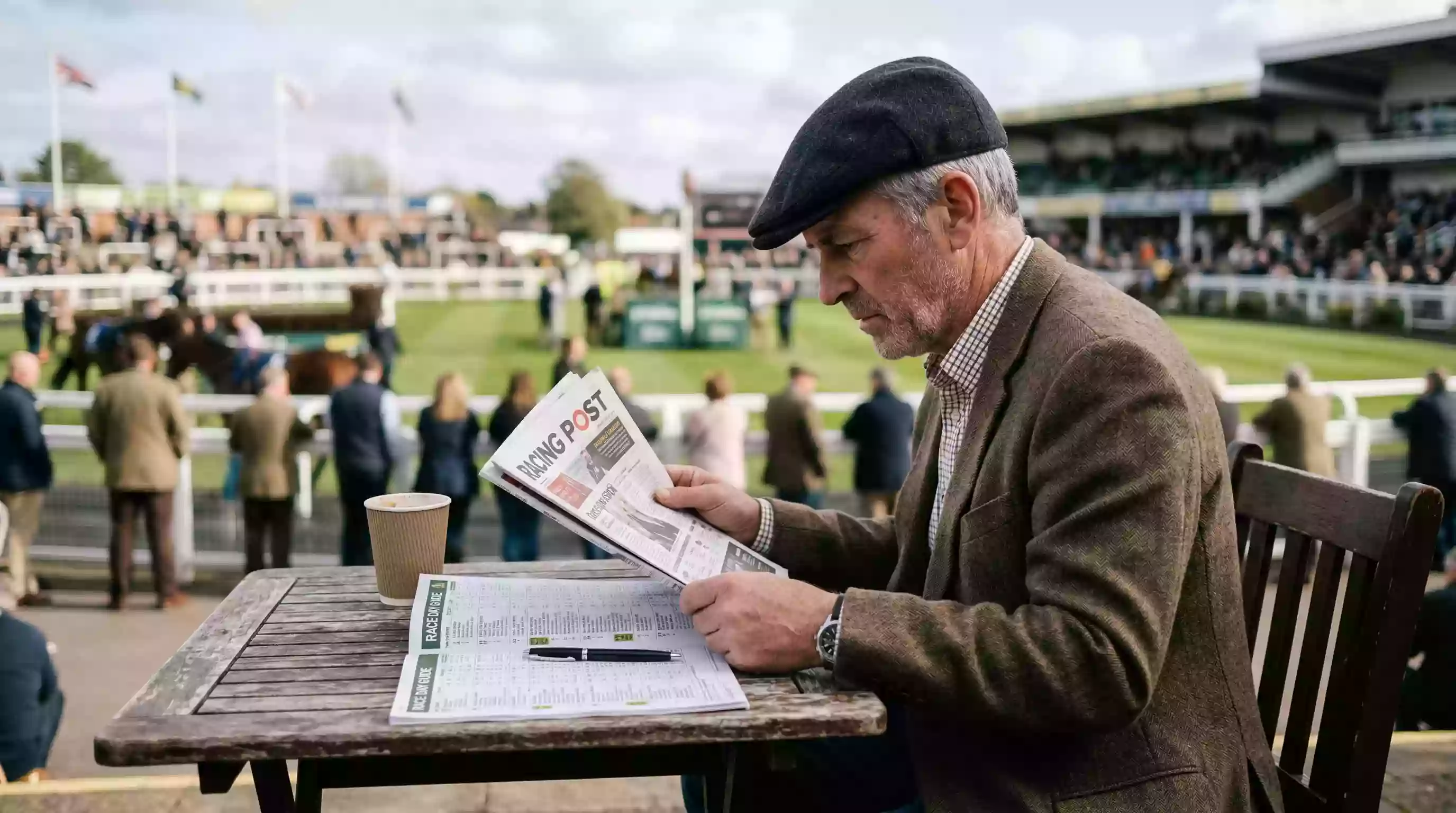
How to Bet on Horses at the Racecourse: On-Course Bookmakers, the Ring and Parade Ring Tips
 Available in US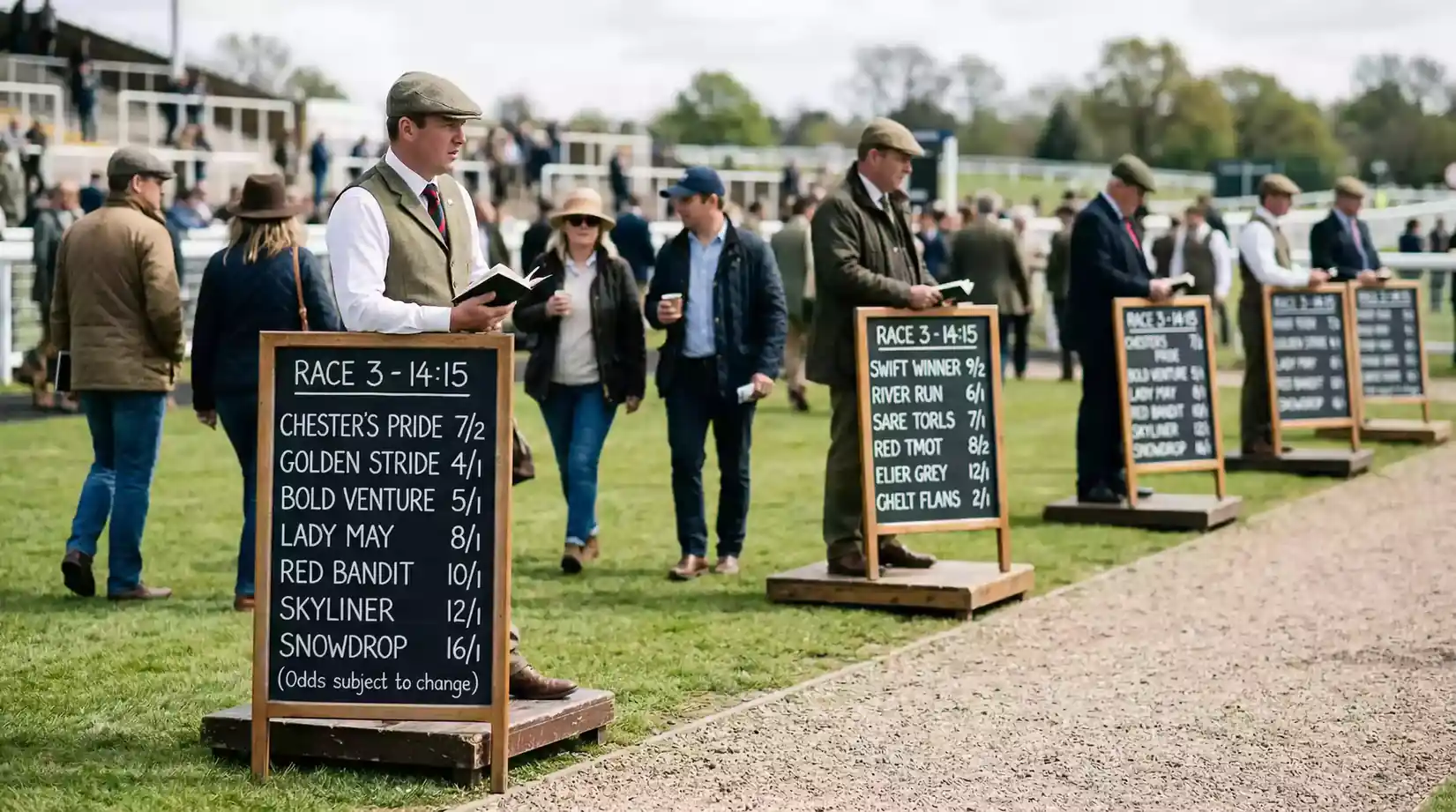
What Betting Looks Like When You’re Actually Trackside
The first time I walked into the betting ring at Newbury, I froze. Rows of bookmakers shouting odds, punters weaving between them, prices flickering on display boards — it was nothing like the quiet experience of tapping a phone screen. That sensory overload is exactly what hooks people. In 2025, 68 percent of racecourse visitors were casual or first-time attendees, and for most of them, the betting ring is simultaneously the most exciting and most intimidating part of the day.
On-course betting is a different world from its online counterpart. There are no algorithms managing your account, no pop-up promotions, and no deposit limits built into the interface. It is you, your cash or card, and a bookmaker standing on a wooden box behind a board of chalked-up prices. The rules are the same — you pick a horse, you state your stake, you get a ticket — but the feel is entirely different. And for many people, that feel is the whole point of going racing.
The Betting Ring: How to Approach an On-Course Bookmaker
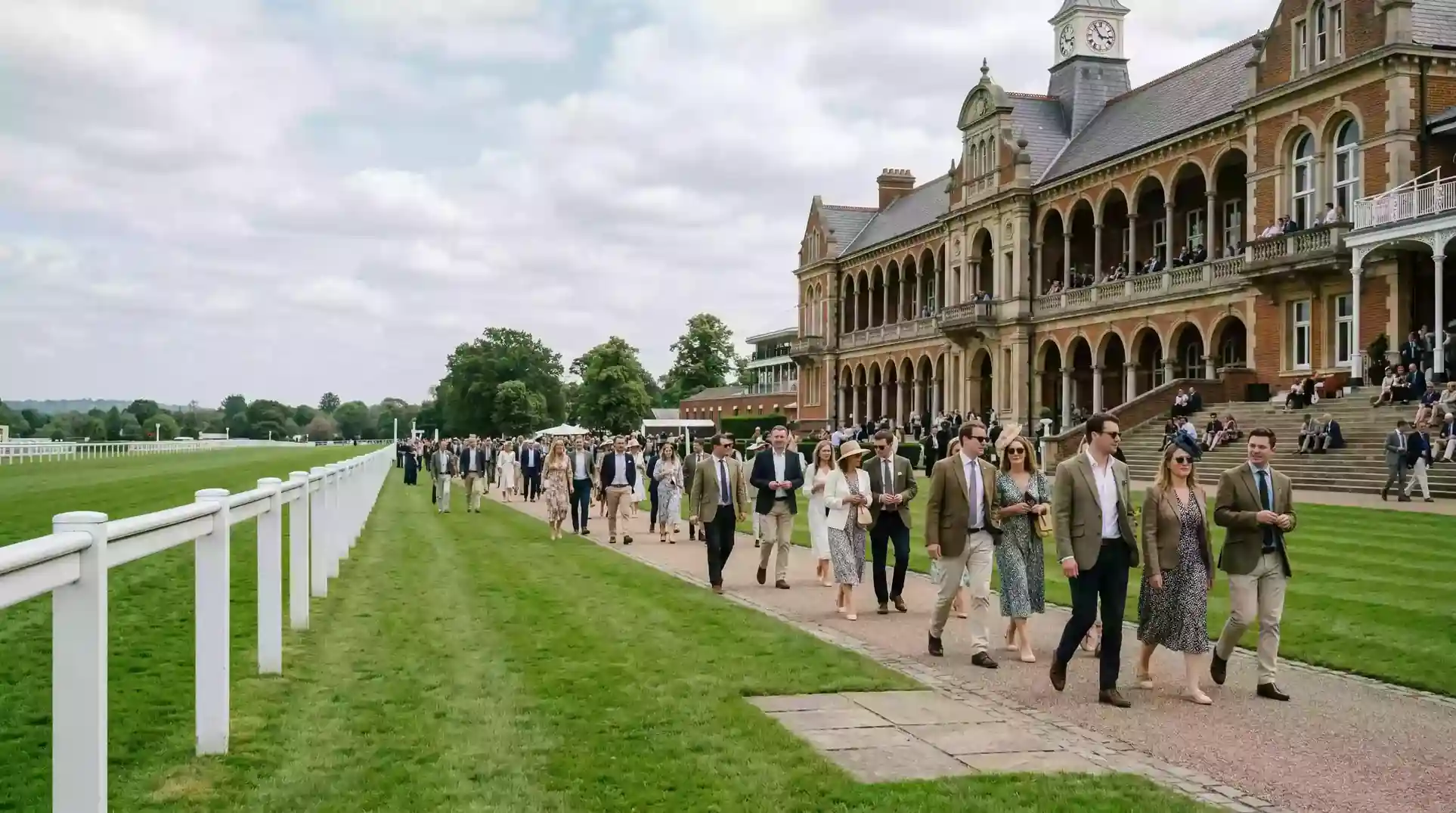
Racecourse attendance passed the five million mark in 2025 for the first time since before the pandemic, and a substantial number of those visitors placed a bet in the ring. Yet I still meet people who have been to three or four meetings without ever approaching a bookmaker because they did not know the etiquette.
There is no etiquette. Walk up, look at the board, and tell the bookmaker what you want. “Five pounds each way on number six, please.” That is it. The bookmaker will write your ticket — or print it from an electronic terminal — confirm the odds, take your money, and hand you a slip. If the horse wins or places, you return to the same bookmaker with your ticket to collect.
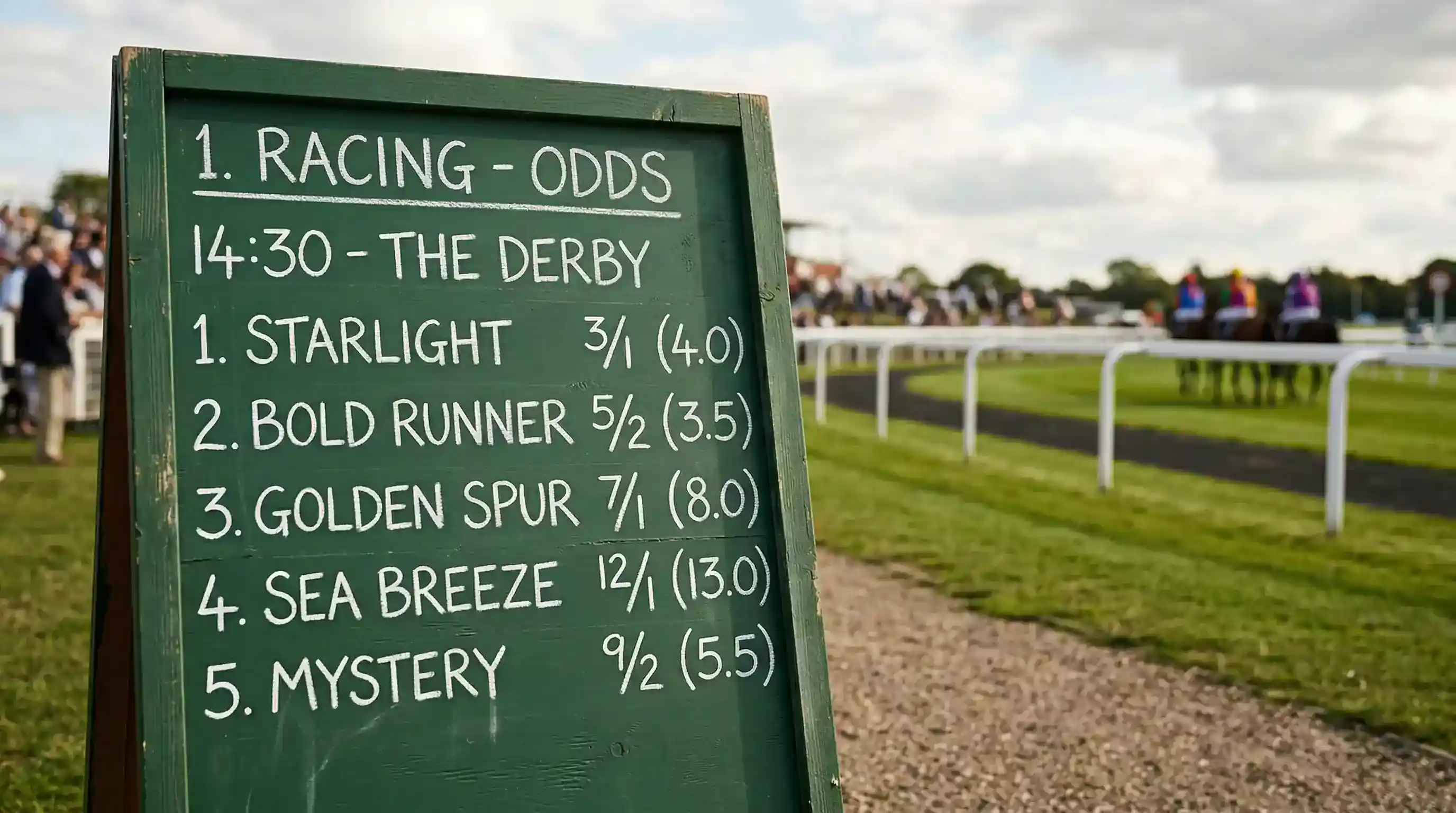
The critical advantage of the ring is price comparison. Unlike online, where you see one bookmaker’s price at a time, the ring lays out a dozen boards side by side. One bookmaker might have your horse at 8/1 while the next offers 9/1. Walking twenty feet can improve your return by over 12 percent on the same bet. I always do a lap of the ring before placing a bet at any meeting. It takes sixty seconds and often saves pounds.
Rails bookmakers — those positioned along the rail at the edge of the ring — tend to deal in larger stakes and often offer the sharpest prices. They cater more to professionals and serious punters. The bookmakers in the centre of the ring are generally more accessible for casual bettors and smaller stakes. Either will take your bet; the experience just differs slightly in atmosphere.
Using the Parade Ring to Assess Horses Before You Bet
Most first-timers skip the Parade Ring entirely, heading straight for the betting ring or the bar. That is a mistake. Fifteen minutes before each race, the runners are walked around the Parade Ring for exactly one reason: so you can look at them.
You do not need a veterinary degree to extract useful information here. What you are looking for is demeanour and condition. A horse that walks calmly, ears pricked, coat gleaming, is a horse that is well and ready to race. A horse that is sweating heavily, pulling against its handler, or planting its feet may be anxious or not in peak condition. None of this is definitive — some brilliant racehorses are notoriously bad walkers — but it adds a layer of information that no form guide can give you.
Pay attention to muscle tone. Flat sprinters tend to be compact and muscular through the quarters. Staying chasers are leaner, built for endurance. If a horse looks noticeably different from its peers — heavier, lighter, duller in the coat — that observation is worth factoring in. After the Parade Ring, the jockeys mount and canter to the start. Watch how the horse moves under the rider. A fluid, relaxed canter is a positive sign. A horse that fights its jockey or breaks into a sweat on the way to post is using energy it will need later.
Cash, Card and Costs: What a Day at the Races Really Takes
I tell every first-timer the same thing: set a total budget for the day before you leave the house, and split it into three pots. One for entry and food. One for betting. One for emergencies and the journey home. Do not let the pots mix.
Entry prices vary enormously. Smaller midweek meetings might charge 15 to 20 pounds, while premium enclosures at Royal Ascot or Cheltenham run into hundreds. Most regional racecourses offer general admission between 15 and 30 pounds, with discounts for advance booking. Under-18s are often admitted free or at a reduced rate — attendance among that age group rose 17 percent in 2025, reflecting the sport’s active push to attract younger audiences.
On-course bookmakers have historically been cash-only operations, but this is changing. An increasing number now accept card and contactless payments, particularly at larger meetings. The Tote has accepted cards for years. That said, I still carry cash to the races. Some smaller bookmakers at county meetings do not have card facilities, and there is a practical advantage to having a physical note in your hand: you can see exactly what you are spending. When your betting pot is gone, you stop. That tangible limit is harder to feel when you are tapping a card.
Food and drink on course is priced at event levels — expect to pay 5 to 7 pounds for a pint, 8 to 12 pounds for a main course from a food stall. Some courses allow picnics in certain enclosures, which can cut costs significantly. Factor these expenses into your day budget so they do not eat into your betting money or, worse, tempt you to bet more to compensate.
For the basics of managing what you spend on betting itself, whether on course or online, the bankroll management guide covers staking plans and unit sizing in full.
Can I use card or contactless with on-course bookmakers?
Increasingly, yes. Many on-course bookmakers at larger meetings now accept card and contactless payments, though some smaller operators at county fixtures remain cash-only. The Tote accepts cards at all racecourses. If you plan to bet exclusively with ring bookmakers, carrying cash is still the safest option to avoid being caught out.
What is the Parade Ring and how does it help me choose a horse?
The Parade Ring is the area where horses are walked before each race so that racegoers, trainers, and owners can assess them. You can observe a horse’s condition, demeanour, and movement. A calm, well-muscled horse with a shiny coat is generally showing positive signs. While no visual assessment is foolproof, the Parade Ring adds real-world information that form guides cannot provide.
Prepared by the First bet Horse Racing editorial staff.