Horse Racing Glossary: 50+ Terms Every Beginner Needs to Know
 Available in US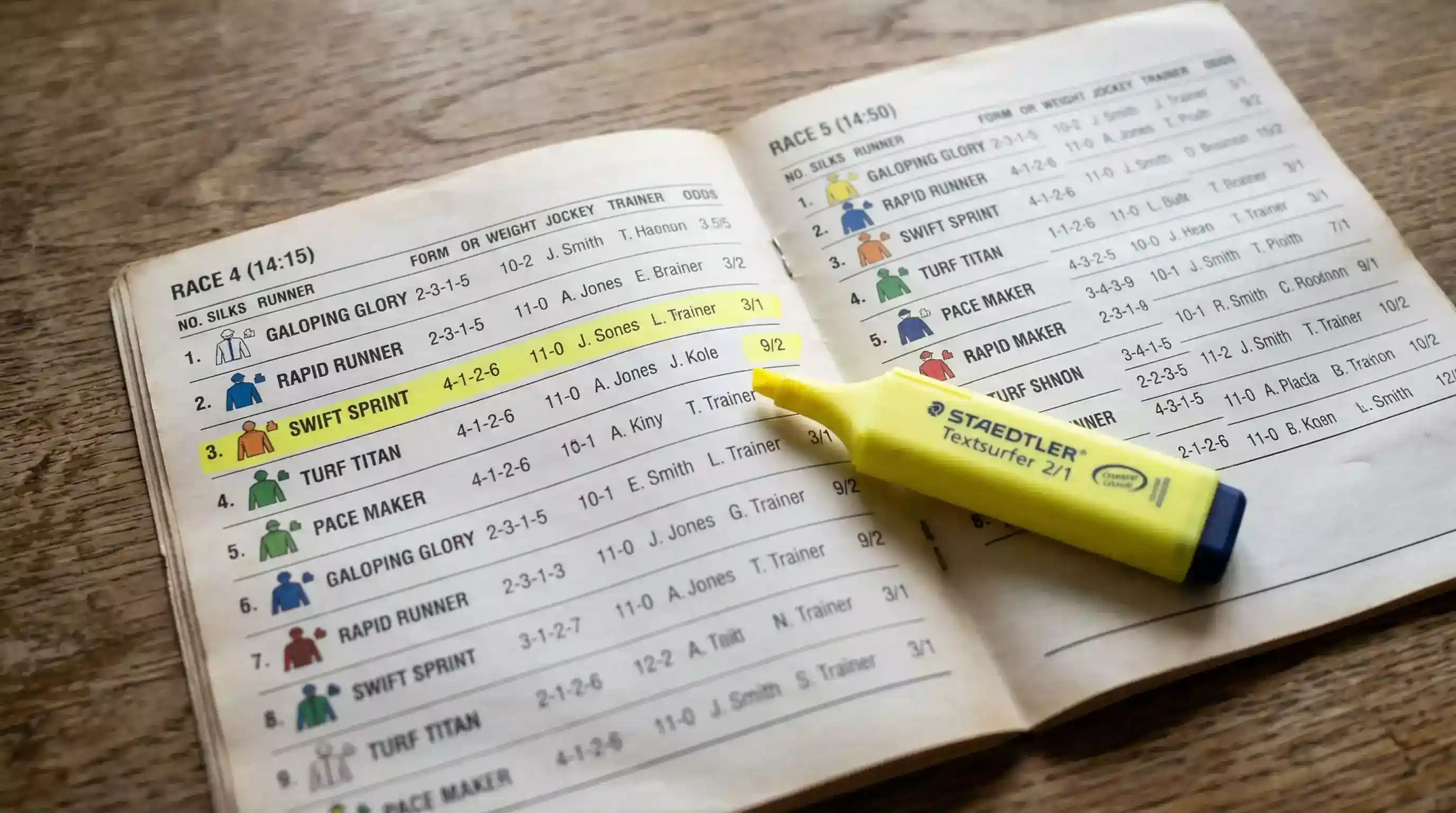
Why Racing Has Its Own Language — and How to Crack It
I spent my first day at the races nodding along as someone told me to look for a horse “well in at the weights” that was “dropped in class” and had “form on the going.” I understood none of it. Racing speaks a language built over three centuries of tradition, betting slang, and technical jargon that insiders use without thinking. For newcomers, it can feel like a deliberate barrier — and BHA research through Project Beacon confirmed that terminology complexity is one of the key reasons 16.9 million potential fans have had minimal or no contact with the sport.
This glossary strips the jargon down to plain English. I have split it into three categories: betting terms you will encounter when placing a wager, racing and form terms you will see on racecards and in commentary, and informal slang you will hear at the track or in betting shops. Each definition is one or two sentences — enough to understand the term in context, nothing more.
Betting Terms: A–Z
Accumulator — A single bet combining four or more selections. All must win for the bet to pay out, with winnings from each rolling onto the next.
Ante-post — A bet placed well before race day, often weeks or months in advance. Typically offers better odds but carries the risk of no refund if the horse does not run.
Best Odds Guaranteed (BOG) — A bookmaker promotion that pays you at whichever is higher: the price you took or the starting price. Available on most UK and Irish racing.
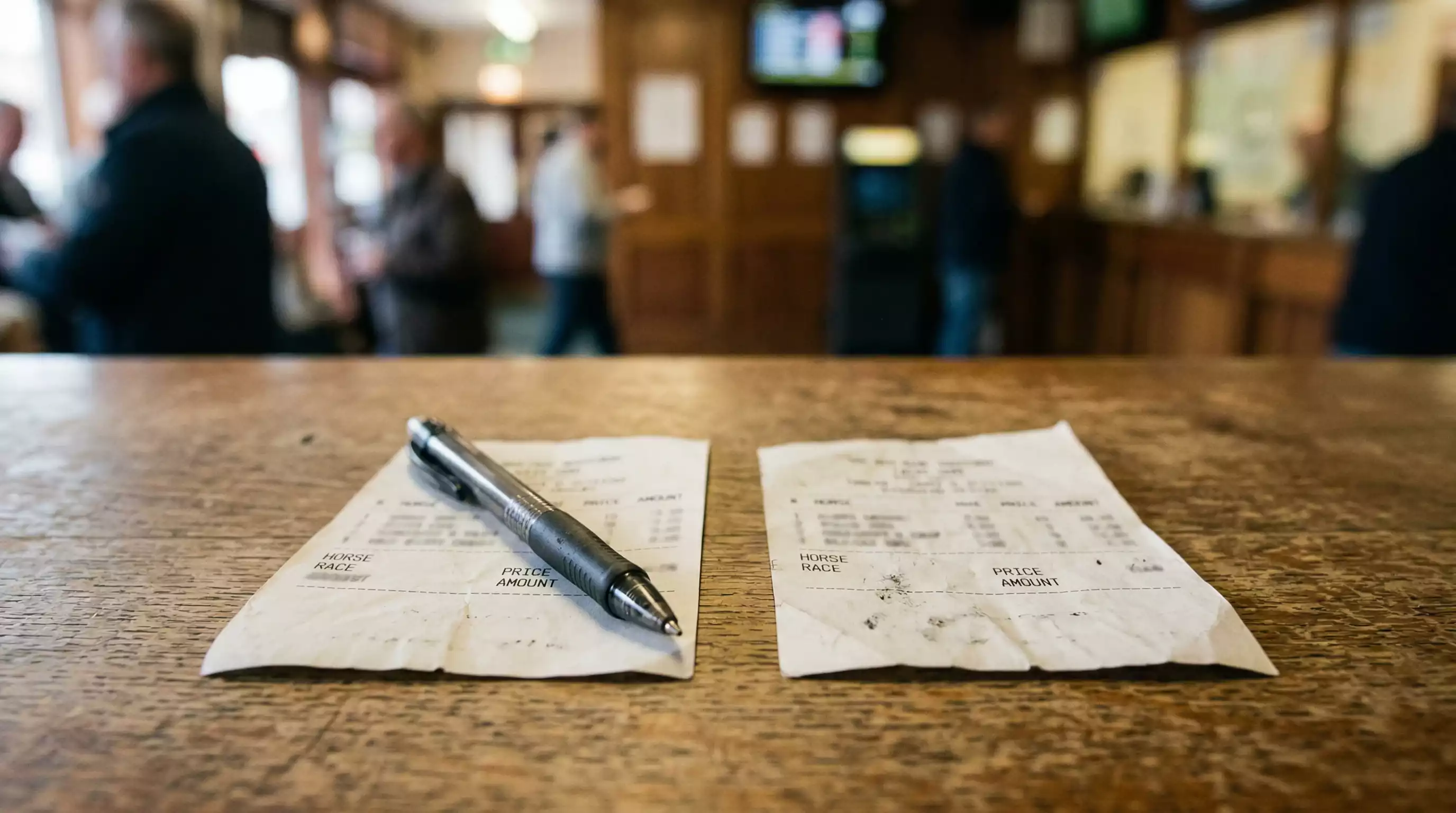
Bet slip — The physical or digital receipt showing your selections, stake, and potential return.
Cash-out — An option to settle a bet before the event finishes, offered by the bookmaker at a calculated value. Always includes a margin for the operator.
Double — A bet on two selections in different races. Both must win.
Each-way — Two bets in one: a win bet and a place bet. If the horse wins, both parts pay. If it places (finishes in the top two, three, or four depending on field size), only the place part pays at a fraction of the win odds.
Forecast — A bet predicting the first and second finishers in the correct order. A reverse forecast covers both possible orders, doubling the stake.
Free bet — A promotional bet credited by the bookmaker, usually as part of a welcome offer. In most cases, the stake is not returned — only the profit is paid out.
In-play (in-running) — Betting that takes place after a race has started. Odds fluctuate in real time based on what is happening in the race.
Lucky 15 — A full-cover bet on four selections, consisting of 4 singles, 6 doubles, 4 trebles, and 1 fourfold — 15 bets in total. Bookmakers often offer consolation bonuses if only one selection wins.
Nap — A tipster’s strongest selection of the day. The term comes from the card game Napoleon.
Odds-on — Odds shorter than even money, meaning the potential profit is less than the stake. A horse at 4/5 is odds-on: a five-pound stake returns nine pounds (four profit plus five stake).
Overround — The bookmaker’s built-in margin across a market. If you converted every horse’s odds to implied probability and added them up, the total would exceed 100 percent. The excess is the overround.
Place terms — The rules determining how many finishing positions qualify for a payout on the place part of an each-way bet. Set by field size.
Rule 4 — A deduction applied to winning bets when a horse is withdrawn from a race after betting has opened. The deduction compensates for the shortened field and is based on the withdrawn horse’s odds at the time of withdrawal.
SP (Starting Price) — The official odds of a horse at the moment the race starts, determined by on-course bookmakers. Used to settle bets when no fixed price was taken.
Stake — The amount of money you risk on a bet.
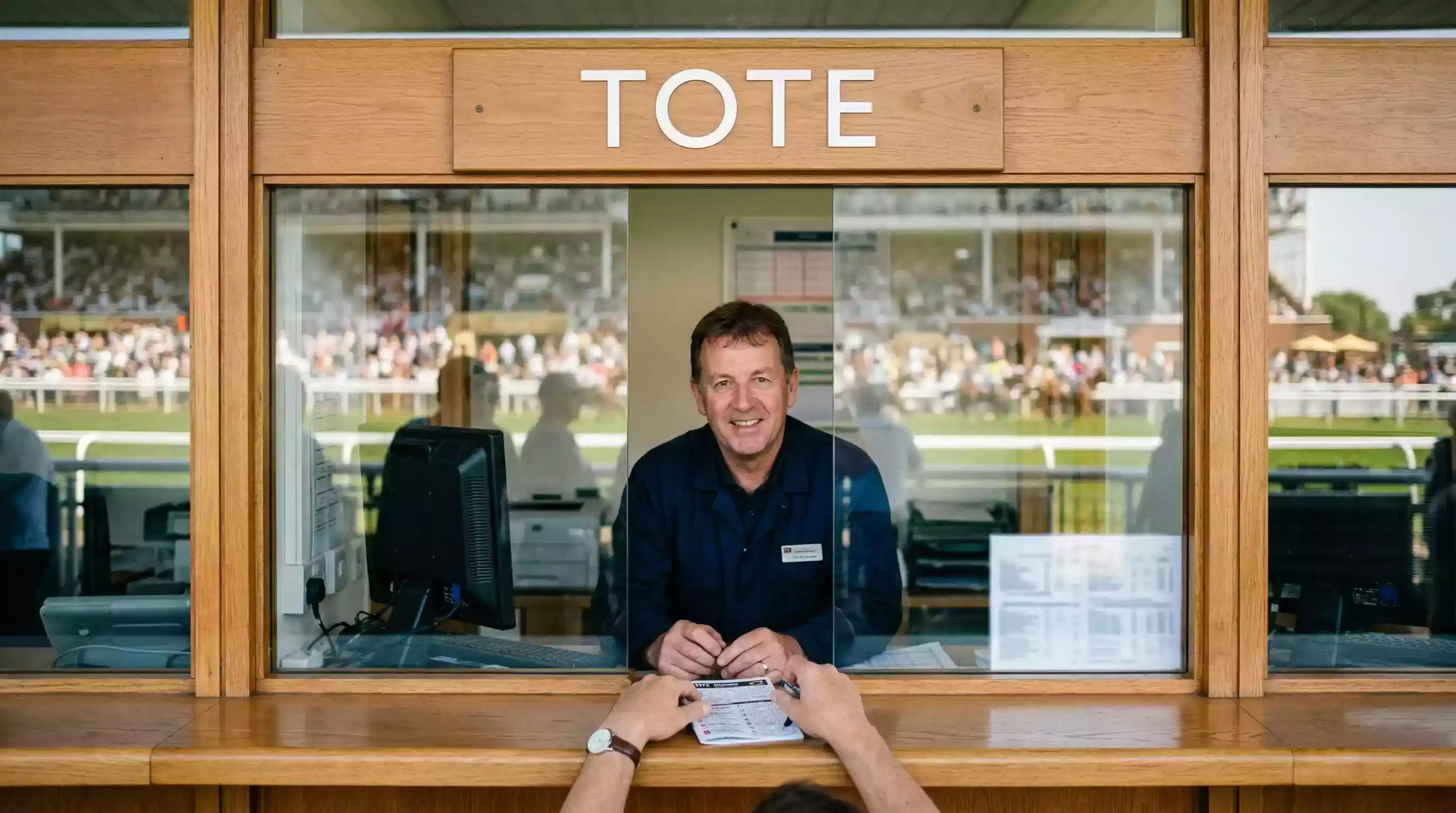
Tote (pool betting) — A system where all stakes on a race go into a shared pool. The payout is calculated by dividing the pool (minus commission) among winning tickets.
Treble — A bet on three selections in different races. All three must win.
Tricast — A bet predicting the first, second, and third finishers in the correct order.
Racing and Form Terms: A–Z
All-weather — A synthetic racing surface (e.g., Polytrack, Tapeta, Fibresand) that is not affected by rain. Courses like Lingfield, Kempton, and Wolverhampton have all-weather tracks.
Bumper — A National Hunt flat race, run without obstacles. Used to introduce young jumps horses to racecourse competition.
Chase (steeplechase) — A National Hunt race over fences. Fences are larger and more solid than hurdles.
Class — A grading system for races, from Class 1 (highest, including Group races) to Class 7 (lowest). A horse’s class determines the level of competition it faces.
Conditions race — A race where entry is based on specific conditions (age, sex, previous wins) rather than a handicap rating.
Course and distance (C&D) — Marked on racecards to show a horse has won previously at today’s course over today’s distance.
Draw — The stall number assigned to a horse in a flat race. At some courses and over certain distances, low or high draws can confer a significant advantage.
Form figures — A sequence of numbers and letters showing a horse’s recent race results. “1” means a win, “2” means second place, “0” means finished outside the top nine, “F” means fell, “U” means unseated rider, “P” means pulled up, “/” separates different seasons.
Going — The condition of the ground on race day. Ranges from hard (fastest) through firm, good to firm, good, good to soft, soft, to heavy (slowest).
Group race — The highest class of flat race. Group 1 is the elite level, followed by Group 2 and Group 3. The jumps equivalent is a Grade race.
Handicap — A race where the handicapper assigns weight to each horse based on its Official Rating, aiming to give every runner an equal chance of winning.
Hurdle — A National Hunt race over smaller, flexible obstacles. Lower and less demanding than chase fences.
Maiden — A horse that has not yet won a race. A maiden race is restricted to such horses.
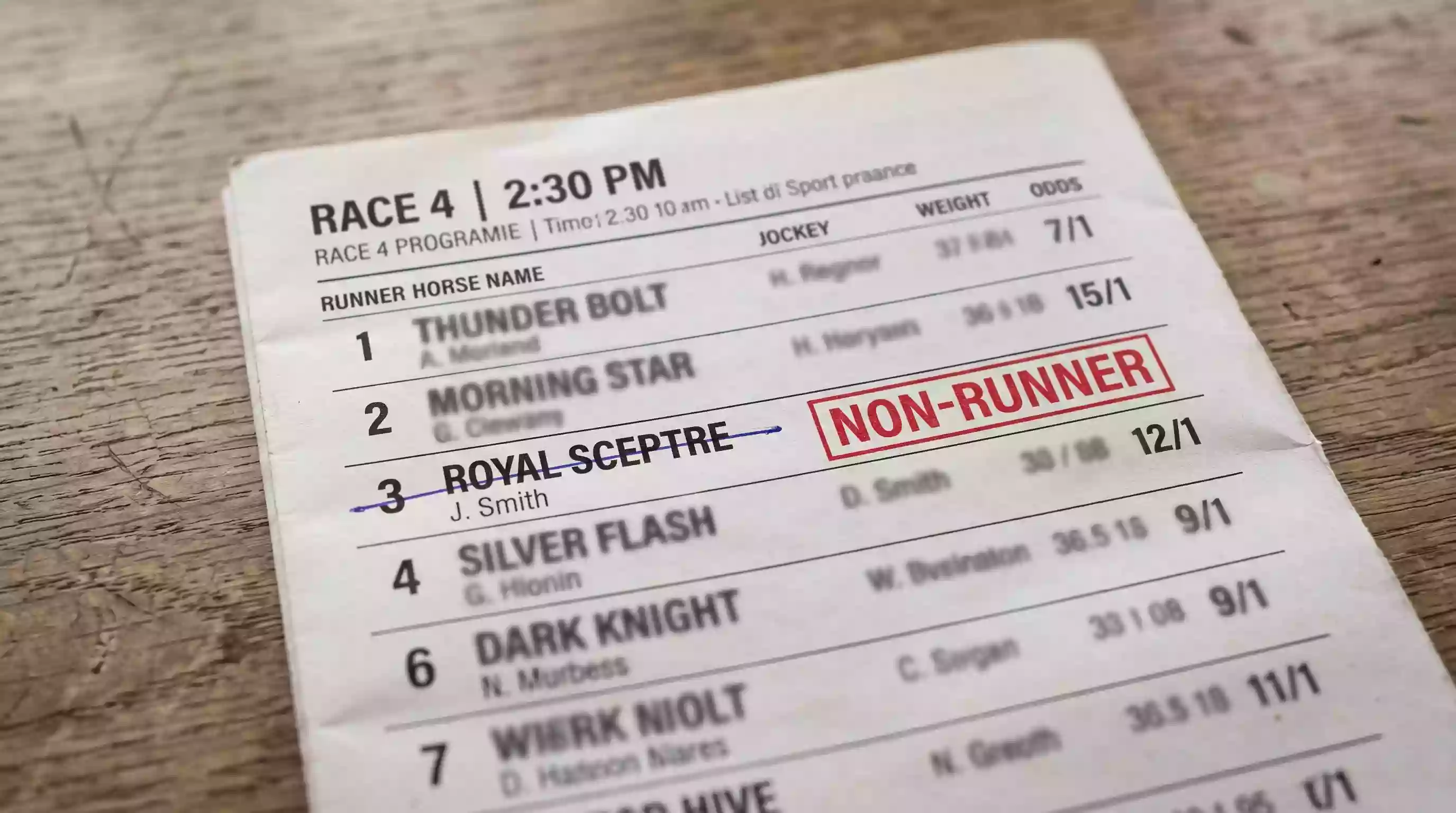
Non-runner — A horse that has been declared for a race but is withdrawn before the start. Reasons include injury, unsuitable going, or a trainer’s decision.
Official Rating (OR) — A number assigned by the BHA handicapper reflecting a horse’s assessed ability. Higher numbers indicate better horses. Used to determine weight in handicap races.
Racecard — The official programme listing all runners, jockeys, trainers, form, weights, and other data for each race at a meeting.
Strike rate — The percentage of winners from total runners, applied to trainers, jockeys, or horses. A trainer with a 20 percent strike rate wins one in five races.
Weights — The total weight a horse carries in a race, including the jockey, saddle, and any lead cloth. In handicaps, weight is assigned by the handicapper.
Punter Slang: The Informal Vocabulary
Banker — A selection a punter considers near-certain to win. Often used as the anchor of a multiple bet.
Jolly — Another word for the favourite. “The jolly got beaten” means the favourite lost.
Flutter — A casual, small bet. “Having a flutter on the 3:30” means placing a modest wager.
Punt — A bet, or the act of betting. “I had a punt on the second favourite” is standard racing conversation.
Rag — A horse with very long odds, considered unlikely to win. Sometimes called a “no-hoper.”
Springer — A horse whose odds shorten rapidly in the market, suggesting significant money has been placed on it.
Steamer — Similar to a springer. A horse that is being heavily backed, causing its odds to drop significantly.
Drifter — The opposite of a steamer. A horse whose odds lengthen in the market, suggesting money is going elsewhere.
On the nose — A win-only bet. “Ten quid on the nose” means a ten-pound straight win bet.
Yankee — A full-cover bet on four selections: 6 doubles, 4 trebles, and 1 fourfold — 11 bets in total. Similar to a Lucky 15 but without the singles.
For a practical guide to decoding the racecard where many of these terms appear, the racecard reading guide walks through every field step by step.
What does ‘SP’ stand for in horse racing results?
SP stands for Starting Price. It is the official odds of a horse at the moment the race begins, determined by on-course bookmakers. If you place a bet at SP rather than taking a fixed price, your returns are calculated using whatever the starting price turns out to be. SP is also the benchmark against which Best Odds Guaranteed is compared.
What is the difference between a ‘bumper’ and a ‘maiden’?
A bumper is a National Hunt flat race — run without hurdles or fences — designed to give young jumps horses experience of racing before they tackle obstacles. A maiden is any horse that has never won a race, or a race restricted to such horses. The terms describe different things: bumper is a race type, maiden is a status. A horse can run in a maiden bumper, which would be a National Hunt flat race for horses that have never won.
Prepared by the First bet Horse Racing editorial staff.